


















A Rocha Ghana has called on the government to immediately declare the Atewa Range Forest Reserve a National Park, warning that intensifying illegal mining is placing the century-old forest at serious risk of irreversible damage.
The environmental organisation says illegal mining activities within the reserve have reached unprecedented levels, placing enormous pressure on institutions responsible for protecting the forest and threatening critical water sources, biodiversity and the livelihoods of communities in the surrounding areas.
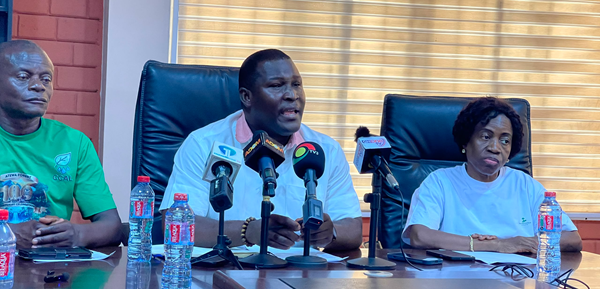
Speaking at a press conference in Accra, National Deputy Director of A Rocha Ghana, Daryl Bosu, said the situation required an urgent and coordinated national response.
The event was organised in partnership with Eco Conscious Citizens and Concerned Citizens of Atewa Landscape.
Mr Bosu said information from court records, Forestry Commission correspondence, operational reports and field documentation pointed to increasing pressure on the reserve.
“We can lose the forest if we delay in taking very decisive actions as a matter of urgency,” he warned.
According to A Rocha Ghana, illegal mining activities have been documented around the Wankobi Stream headwaters and other sections of the reserve.
Mr Bosu said field evidence included excavated mining pits, widespread forest degradation, polluted streams, makeshift camps and abandoned mining equipment.
The organisation also raised concerns about the safety of Forestry Commission personnel and security agencies deployed to protect the reserve.
Mr Bosu cited a March 2, 2026 communication from the Kyebi Forest District Manager, Owusu Ameyaw, which reportedly indicated an influx of illegal miners into the Sagyimase/Asikam section of the reserve.
The report, he said, indicated that 60 people had been arrested, although illegal mining activities continued.
He also referred to a February operation involving 55 police officers which, according to him, was undermined by an apparent leak of information, resulting in only five arrests.
Mr Bosu further alleged that two forest guards had been held hostage by illegal miners before being rescued by police reinforcements.
Recent operations by the National Anti-Illegal Mining Operations Secretariat (NAiMOS), he added, had led to arrests and the seizure of mining equipment and weapons, including an excavator, drilling machines, dynamite, a pump-action shotgun and ammunition.
A Rocha Ghana said the developments demonstrated that the challenge extended beyond isolated illegal mining activities and required a broader national response.
The Atewa Range was gazetted as a forest reserve in 1926, making 2026 the centenary of its protected status.
The reserve covers approximately 26,300 hectares and contains the headwaters of the Ayensu, Densu and Birim rivers, as well as more than 99 streams.
A Rocha Ghana said the forest was therefore critical to water security and biodiversity conservation.
The organisation said the reserve is also home to a wide range of bird, mammal, amphibian and plant species, including species considered threatened with global extinction.
Mr Bosu warned that the consequences of continued degradation would extend beyond the loss of forest cover.
“Mining in Atewa threatens water resources, biodiversity, climate resilience and the cultural heritage of the Akyem Abuakwa Traditional Area,” he said.
A Rocha Ghana and its partners are calling for the immediate conversion of the reserve into a National Park, arguing that existing protection arrangements have not kept pace with the scale of the threat.
They are also demanding a permanent and adequately resourced joint security task force for the reserve, improved logistics and increased personnel for the Forestry Commission.
The groups further called for the speedy prosecution of illegal mining cases and proposed the establishment of a dedicated court for illegal mining cases in the Eastern Region.
They also urged authorities to investigate alleged information leaks and possible official complicity in illegal mining activities.
In addition, the organisation called on the government to abandon plans for bauxite mining in the Atewa Range.
Beyond enforcement, A Rocha Ghana is advocating an alternative economic development model it calls the “Atewa Green Option.”
The proposal focuses on ecotourism, agroforestry, climate finance, land restoration and sustainable value chains as potential sources of income and employment for communities around the forest.
Mr Bosu said studies cited by the organisation indicated that protecting and restoring Atewa could generate greater long-term economic value than mining while creating jobs and supporting local communities.
He said tourism alone could potentially generate more than US$5 million annually, with thousands of jobs created through tourism-related activities and other green enterprises.
The organisation said the centenary of Atewa’s protection provided an opportunity for the country to reconsider how it safeguards the forest for future generations.
Mr Bosu recalled the role of Nana Sir Ofori Atta I in the decision to protect the forest in 1926, as well as the continued opposition of the Okyenhene and the Akyem Abuakwa Traditional Area to mining in Atewa.
He said Ghana was now faced with a choice between allowing the forest to suffer further degradation from illegal mining and protecting it as a national ecological asset.
A Rocha Ghana therefore urged the government to move beyond periodic enforcement operations and establish permanent legal, institutional and security measures to safeguard the Atewa Range Forest Reserve.