






















The Director-General of the Cyber Security Authority (CSA), Divine Selase Agbeti, has urged the media to recognise national security as a shared responsibility and position it as a strategic partner in protecting Ghana’s information space.
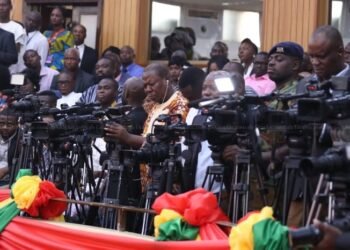
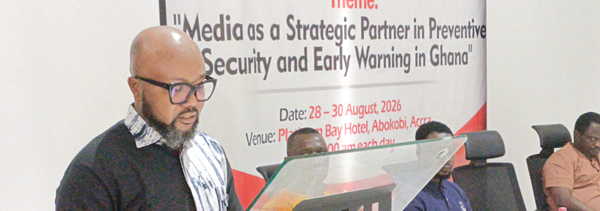
Mr. Agbeti made the call in his closing remarks at the end of a two-day Capacity Building Workshop on Responsive National Security Reporting organised for members of the Private Newspapers and Online News Publishers Association of Ghana (PRINPAG).
He said the workshop had exposed participants to key aspects of Ghana’s national security environment, including the country’s security architecture, emerging asymmetric threats, communal conflicts, strategic communication, legal frameworks, cybercrime, information warfare, ethics, press freedom and the national interest.
According to him, these issues collectively define the environment within which journalists and newsrooms must operate, making responsible reporting increasingly important to national resilience.
“National security is not the exclusive responsibility of the security agencies.
It is a shared national duty and the media is a strategic partner,” he said.
Mr. Agbeti, however, stressed that such a partnership should not compromise the independence of the media or turn journalists into extensions of government.
He said an independent and professional press strengthens national security by exposing wrongdoing, countering false information, informing citizens and holding public institutions accountable.
However, he noted that press freedom must be accompanied by responsibility.
He warned that inaccurate reporting could have serious consequences, particularly in an increasingly volatile information environment.
According to him, misleading headlines, unverified videos and the publication of sensitive operational information could spread fear, inflame communal tensions, undermine public confidence, compromise investigations and potentially put lives or critical systems at risk.
Mr. Agbeti also drew attention to the growing use of digital manipulation by cybercriminals and hostile actors, who exploit fear, urgency and public trust through impersonation, compromised accounts, manipulated images, synthetic audio and coordinated disinformation.
He described journalists and newsrooms as both potential targets and force multipliers in the fight against misinformation, warning that the compromise of a journalist’s account could give attackers access not only to sensitive information but also to the journalist’s credibility and audience.
He therefore urged news organisations to make cybersecurity part of their editorial culture by adopting basic safeguards such as strong and unique passwords, multi-factor authentication, timely software updates, secure backups, verification of links and attachments, clear access controls and an incident response plan.
Mr. Agbeti said strengthening cybersecurity practices within newsrooms would not only protect journalists and media organisations but also enable them to better educate the public on safe digital practices.
“If the media themselves have this practice then it is easy to educate those out there,” he added.