

























Government will invest GH¢30 billion in its New Economy Programme in 2027 as part of a four-year US$10 billion initiative aimed at transforming the structure of Ghana’s economy, expanding production and creating jobs.
The investment, equivalent to 1.5 per cent of Gross Domestic Product (GDP), is expected to provide funding for productive infrastructure, industries and other interventions under the programme.
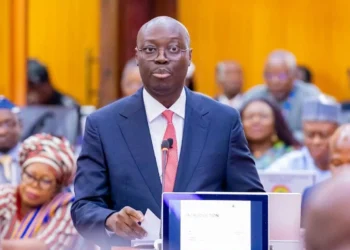
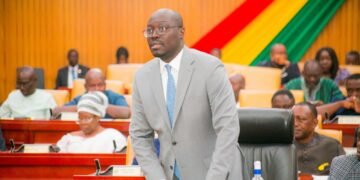
Finance Minister Dr. Cassiel Ato Forson announced the allocation while presenting the 2027 Budget Statement and Economic Policy to Parliament on Thursday, November 12.
He said the investment would lay the foundation for economic transformation by supporting businesses, increasing exports and creating employment opportunities.
“In 2027, we will invest 1.5 per cent of GDP, equivalent to GH¢30 billion, in the New Economy,” he told Parliament.
The GH¢30 billion allocation forms part of government’s broader commitment to spend US$10 billion over four years, from 2027 to 2030, on the programme.
Dr. Forson said the New Economy was designed to address structural weaknesses in the economy, particularly Ghana’s dependence on raw material exports and limited domestic value addition.
“The New Economy is the Government of Ghana’s four-year programme, beginning in 2027, to confront these weaknesses and transform the structure of our economy,” he said.
He added, “We will expand production, process more of our resources at home and turn our nation’s wealth into decent jobs, higher incomes and lasting prosperity.”
The programme is built around eight pillars: macroeconomic stability and affordable finance, commercial agriculture, energy infrastructure, critical minerals value addition, tourism, culture and creative arts, textiles and garments, pharmaceuticals and biomanufacturing, and the technology economy.
Under the financing arrangements, government intends to create additional fiscal space by reducing the primary surplus target by one percentage point of GDP over the programme period. Tax reforms already approved by Parliament and compliance measures are also expected to generate 0.5 per cent of GDP.
The Finance Minister said the programme would be implemented with private-sector participation, with government providing strategic infrastructure and creating conditions to support enterprise.
“The private sector will carry the principal responsibility for investment, innovation, production and sustainable employment,” he stated.