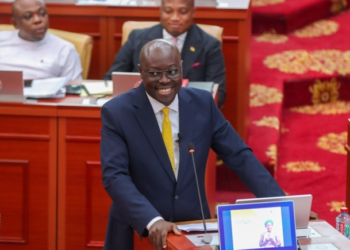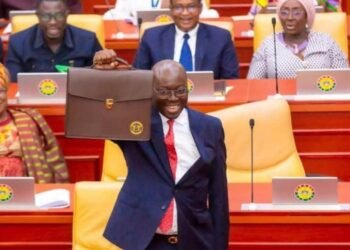




























Finance Minister Dr. Cassiel Ato Forson has announced that the 2027 Budget will not introduce any new taxes, assuring households and businesses of the government’s commitment to easing the tax burden.
He made the announcement while presenting the 2027 Budget Statement and Economic Policy to Parliament on Thursday, November 12.
According to him, government intends to focus on improving revenue mobilisation, closing loopholes and ensuring that existing tax obligations are properly collected.
Dr. Forson said the decision follows a series of tax measures introduced since 2025 to provide relief to households and businesses.
Among the levies abolished were the Electronic Transfer Levy (E-Levy), withholding tax on betting and lottery winnings, COVID-19 Levy, Emissions Levy and VAT on motor vehicle insurance.
“This 2027 Budget will not introduce any new tax,” he told Parliament.
He explained that government would instead strengthen its revenue collection systems and address leakages to improve revenue generation.
“Our task is to collect what is lawfully due, close the leakages and make the revenue system work better,” Dr. Forson said.
The Finance Minister also announced plans to review and modernise several existing tax laws in 2027, including the Income Tax Act, Revenue Administration Act, Stamp Duty administration and Communications Service Tax framework.
He said the reforms would be accompanied by regulations to ensure consistent application of the revised tax laws.
“Taxpayers deserve clear rules, fair treatment and timely decisions,” he added.
Government also plans to review Ghana’s Double Taxation Agreements in line with the United Nations Framework Convention on International Tax Cooperation to address tax evasion and treaty abuse while protecting legitimate investments.
In another measure aimed at encouraging clean energy adoption, Dr. Forson announced that solar panels and batteries would be exempted from import duties and Value Added Tax (VAT).
The exemptions are expected to lower the cost of adopting solar technology among households and businesses and form part of the incentives under the 24-Hour Economy Programme.