
















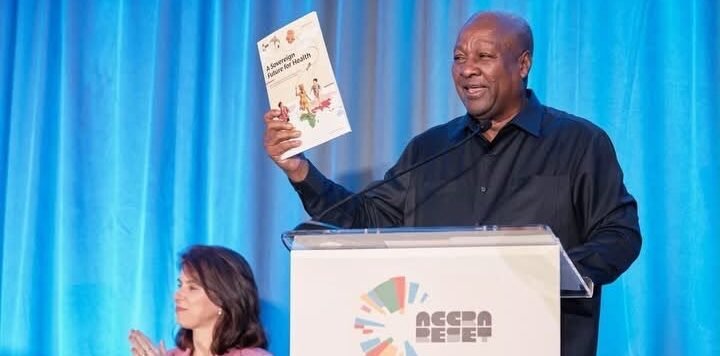
President John Dramani Mahama has called for a new approach to healthcare in the Global South, with countries taking greater control of their health policies, resources and development priorities.
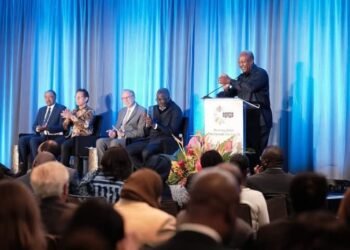
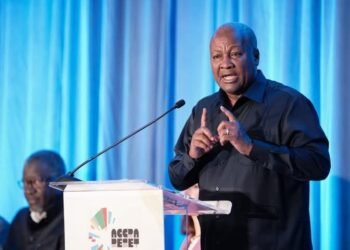
According to President Mahama, countries cannot achieve real ownership of their health systems if key decisions remain outside their control. He made the remarks on Monday, September 21, 2026, at a high-level side event on the Accra Reset: Global Reset Dialogue in New York.
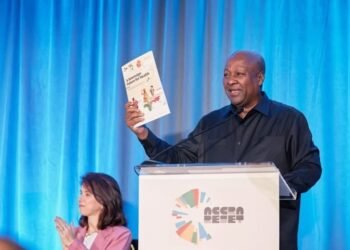
The event was held on the sidelines of the 81st United Nations General Assembly. It also marked the launch of the High-Level Panel report, A Sovereign Future for Health.
The report contains 10 recommendations aimed at reforming global health governance. It also seeks to strengthen national and regional capacity in healthcare.
President Mahama said the Accra Reset was driven by three major challenges affecting the Global South. These include geostrategic marginalization, geopolitical vulnerability and donor dependence.
He said the challenges are connected and require a coordinated response. That response, he explained, should combine political authority, productive capacity and financial resilience.
President Mahama also raised concerns about the concept of “country ownership” in development programmes.
He argued that countries are often expected to take responsibility for programmes while external partners retain significant control over key decisions.
“For decades, nations of the Global South have been asked to own the results of health and development programmes, while others retain the control,” he said.
The President said the Accra Reset was seeking to change that situation. “Today, through the Accra Reset, we declare unequivocally that there can be No Ownership Without Control.”
However, President Mahama stressed that control must be matched by accountability.
He warned that simply moving decision-making power from international institutions to national governments would not guarantee genuine sovereignty.
“But let me be equally frank with my brothers and sisters across the Global South. Moving power from distant boardrooms in Geneva or Washington into an unaccountable ministry in Accra, Abuja, or anywhere else will not magically manifest sovereignty either,” he said.
He said countries must demonstrate responsible leadership if they want greater control over their development priorities.
“If we demand control, we must earn it through uncompromising domestic accountability,” he said.
President Mahama cited Ghana’s Resetting Ghana Agenda as part of efforts to improve fiscal management and strengthen public accountability.
He said the same principle should apply to countries across the Global South.
“The same principle applies across the Global South: No ownership without control, yes; but no control without absolute accountability to our people,” he stated.
The President described this balance as the foundation of what he called a New Global Bargain.
He said the proposed approach would connect responsibility with authority and authority with productive capacity.
President Mahama also outlined how Ghana plans to move the Accra Reset from policy discussions to implementation.
Ghana and the Presidential Council will engage governments, global health organisations, development finance institutions, philanthropies and private-sector partners.
The aim is to translate the recommendations in A Sovereign Future for Health into practical country-level agreements.
The President also called for stronger cooperation among countries in Africa, Asia and the Gulf. He invited strategic partners to help build networks that connect research, regulation, local manufacturing and reliable distribution.
President Mahama made it clear that the push for health sovereignty is not a call to end international partnerships.
“Let me be clear: this sovereign health agenda is not a retreat into isolationism,” he said. “We are seeking pragmatic interdependence: a mature, equal partnership where we see one another as equals.”
He said stronger health systems in Africa and Asia would also contribute to greater global health security. Maternal and child health, President Mahama added, will be an important test of the proposed reforms.
The Accra Reset is now moving from policy design to implementation. Ghana and its partners are expected to focus on health financing, local manufacturing, regional cooperation and stronger accountability.
President Mahama said the broader goal is to build health systems that can deliver lasting results and protect people across the Global South.