












Ghana and China have agreed on a three-pronged strategy to tackle illegal mining, deepen geological cooperation and promote responsible investment in Ghana’s mining sector.
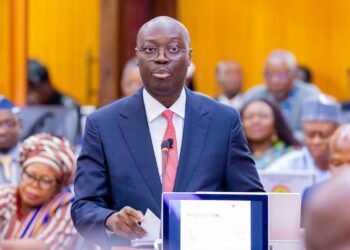
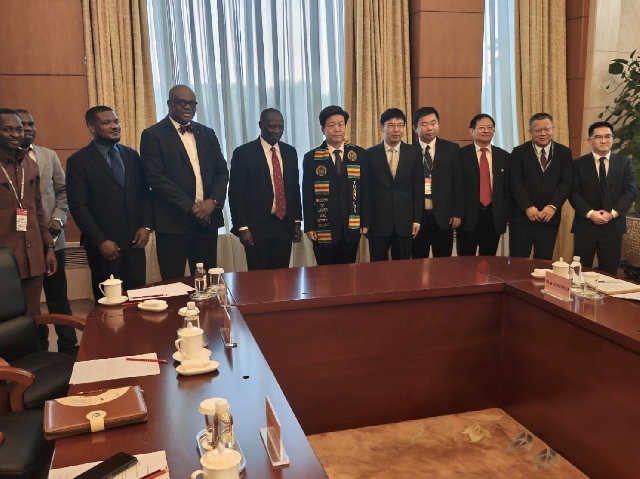
The agreement was reached between the Minister for Lands and Natural Resources, Emmanuel Armah-Kofi Buah, and China’s Deputy Minister of Natural Resources, Sun Shuxian, on the sidelines of the 2026 China Mining Conference in Tianjin.
The collaboration will focus on strengthening efforts to ensure that Chinese companies operating in Ghana comply fully with the country’s laws and mining regulations.
Mr Armah-Kofi Buah said the two countries would work together to monitor the activities of Chinese nationals and companies involved in Ghana’s natural resources sector.
“This is very important in how we collaborate on critical areas of the natural resources sector. This includes how to work with them in policing Chinese companies that are working in Ghana to make sure that they meet the highest standards,” he said.
He stressed that Chinese nationals found to be involved in illegal mining, popularly known as galamsey, would face appropriate sanctions.
“Those who are found to have broken the law, especially those who engage in illegal mining activities, are not only punished in Ghana, but we have a pathway where the Chinese will also police their people who are working in Ghana,” he added.
The two countries also agreed to strengthen cooperation in green mining technology, environmental protection, technology transfer, geological surveys and mapping.
Mr Buah described the planned collaboration in geological surveys and mapping as a major breakthrough, saying it would enhance Ghana’s understanding and management of its mineral resources.
“We are also collaborating with them on green mining technology, environmental protection and technology transfer.
Critically, we will be working with them on geological surveys and mapping. These are very critical breakthroughs,” he said.
For his part, Mr Sun proposed expanded collaboration in geological surveys, mapping and the assessment of critical mineral resources.
He said China was prepared to provide technical support and promote technological innovation in Ghana’s geological sector.
China also proposed the use of satellite remote sensing and airborne geophysical surveys, as well as the establishment of joint laboratories and personnel exchange programmes.
Mr Sun said Chinese and Ghanaian technicians could undertake annual exchanges and joint field training to strengthen technical capacity.
“On an annual basis, we can send our technicians to each other’s country to help with joint training on field studies so we can help Ghana with technical support,” he said.
Both countries agreed to establish a technical team to coordinate and implement the areas of cooperation identified during the meeting.
Mr Sun welcomed Ghana’s appointment of a focal person to coordinate the partnership, stressing the importance of translating the agreement into concrete action.
“I’m happy that you have identified a focal person to follow up on our collaboration so that our meeting would not just be about talking but walking the talk,” he said.
China also offered to share its experience with Ghana in the rehabilitation of abandoned mining sites.
Mr Sun said China allocates about one billion yuan annually towards the rehabilitation of abandoned mining areas and had accumulated experience and practices that could be useful to Ghana.
He said China was willing to share those experiences with Ghana as part of the broader cooperation to promote environmentally responsible mining.