




















More than 110 children have received access to lifesaving cardiac treatment at the National Cardiothoracic Centre at Korle- Bu Teaching Hospital in the Greater Accra Region through support from the Ghana Medical Trust Fund (GMTF) in its first year of operation.
For the Head of the National Cardiothoracic Centre, Dr Kow Entsua-Mensah, the figure represents far more than a statistic.
He said the intervention has given hundreds of patients, including children facing serious heart conditions, an opportunity to survive, return to school, pursue their dreams and contribute to society.
According to Dr Entsua-Mensah, more than 150 patients at the Centre who faced significant financial barriers to lifesaving cardiac treatment are currently being supported by the Fund, with about 110 of them being children.
He said the intervention raises an important question about what might have happened to patients who could not afford treatment if the GMTF had not been available.
“Who knows what these children will become?” he asked, reflecting on the potential futures of the children who have received treatment.
Dr Entsua-Mensah said children with serious cardiac conditions and their families often face a double burden — dealing with the medical condition while simultaneously struggling to raise money for treatment.
He said the support from the GMTF is helping to ease that financial burden and giving affected families renewed hope.
According to him, the children who receive treatment can now look forward to returning to school, pursuing further education or vocational training and eventually contributing to Ghana’s development.
He noted that some of the beneficiaries could grow into doctors, teachers, engineers, entrepreneurs, artists and other professionals who would contribute significantly to the country.
The impact of the GMTF at the National Cardiothoracic Centre has also extended to the restoration of critical medical infrastructure.
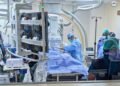
In 2025, a fire destroyed the Centre’s cardiac catheterisation laboratory, a vital facility used in the diagnosis and treatment of complex heart conditions.
By the end of July 2026, the GMTF had supported the replacement of the destroyed facility with a new cardiac catheterisation centre equipped with modern technology.
Since the new facility became operational, more than 60 patients have undergone complex lifesaving procedures there, with additional patients awaiting treatment.
During the Fund’s initial 50-case pilot programme, 15 patients were sponsored to undergo lifesaving procedures at the National Cardiothoracic Centre.
Dr Entsua-Mensah said the programme has since expanded considerably, with more than 150 patients now onboarded for care at the Centre.
For Dr Entsua-Mensah, the significance of the GMTF goes beyond the financial resources committed or the number of procedures performed.
He said its real value should also be measured by the lives restored and the hope returned to families who previously faced the possibility of losing loved ones because they could not afford treatment.
He said adults whose illnesses had affected their ability to work and support their families now had an opportunity to receive treatment and return to their livelihoods.
Children, he added, were also being given the opportunity to overcome serious heart conditions and pursue their aspirations.
Dr Entsua-Mensah described the intervention as “a great investment in humanity”, saying it was helping to restore both lives and hope.
He also said the Fund was creating greater confidence among families that serious illness did not necessarily mean survival would depend entirely on their ability to raise money for treatment.
The cardiothoracic specialist also pointed to the development of cardiology centres at the Komfo Anokye Teaching Hospital in Kumasi and the Tamale Teaching Hospital as an important development in Ghana’s efforts to expand access to specialised cardiac care.
For many years, patients requiring complex cardiac treatment from other parts of the country have had to travel to Accra for specialised care at the National Cardiothoracic Centre.
Dr Entsua-Mensah said the expansion of specialist facilities in Kumasi and Tamale would help change that situation.
He said the National Cardiothoracic Centre could collaborate with the two facilities through professional training, mentorship and knowledge sharing, allowing specialist services to reach more patients outside the capital.
He expressed the hope that the expansion would eventually extend to other parts of Ghana, bringing lifesaving cardiac care closer to communities across the country.
One year into the establishment of the Ghana Medical Trust Fund, Dr Entsua-Mensah said the developments represented the beginning of a new chapter in specialist healthcare delivery.
“For the first time, what we have dreamt of, what we had hoped for is beginning to unfold right before our eyes,” he said.
He noted that the most significant evidence of the Fund’s impact would ultimately be seen not only in new facilities and medical equipment, but also in the lives of beneficiaries.
These include children returning to school after successful heart procedures, parents watching their children recover and play again, and adults returning to work after illnesses had threatened their livelihoods.