


























Finance Minister Dr Cassiel Ato Forson has outlined eight priority areas under the government’s US$10 billion New Economy programme, a four-year initiative designed to transform Ghana’s economic structure, expand local production and create jobs.
Dubbed The New Economy: New Ghana, Jobs and Prosperity, the programme will run from 2027 to 2030, with investments targeting agriculture, energy, critical minerals, tourism, manufacturing, pharmaceuticals and technology.
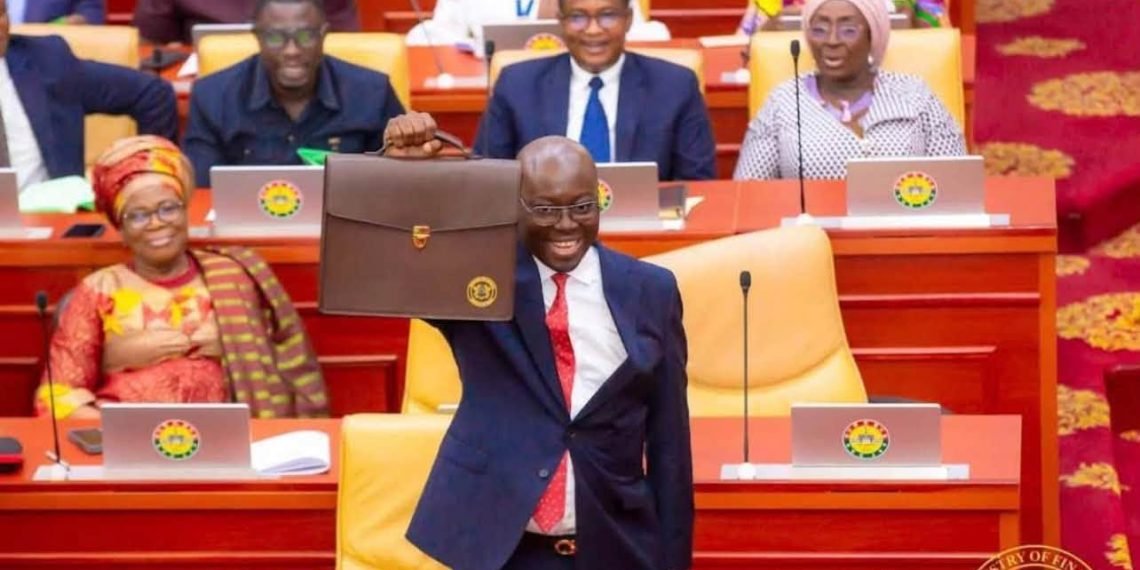
Presenting the 2027 Budget Statement and Economic Policy to Parliament on Thursday, November 12, Dr Forson said the initiative was intended to address longstanding weaknesses in the economy, particularly its dependence on raw material exports and limited domestic value addition.
He said the programme would build on the country’s economic stabilisation efforts by directing resources into sectors capable of expanding production, replacing imports and generating exports.
“Every cedi of that space must answer a national question: what jobs will it create; what imports will it replace; what exports will it generate; and what lasting value will it leave behind?” he told Parliament.
The programme is built around eight interconnected pillars.
1. Macroeconomic stability and affordable finance
The first pillar seeks to preserve the gains from economic stabilisation while making financing more accessible to businesses, farmers and manufacturers.
Government is targeting single-digit inflation, public debt consistent with 45 per cent of GDP and a positive primary balance of at least 0.5 per cent of GDP from 2027.
By 2030, it aims to achieve real GDP growth of about 8 per cent, reduce unemployment to below 8 per cent and establish a credible path towards an investment-grade sovereign credit rating.
The government also intends to bring the cost of capital into single digits by strengthening lending, deepening corporate bond markets and working through Development Bank Ghana, Ghana EXIM Bank and participating financial institutions.
Credit guarantees, equipment leasing and export financing are among the interventions expected to help viable businesses overcome financing constraints.
2. Commercial agriculture – US$3 billion
The second pillar will receive US$3 billion to develop a commercially organised agricultural sector and reduce the country’s dependence on imported food and agricultural products.
The programme will focus on eight value chains: rice, sugar, poultry, maize and soya feed, aquaculture, oil palm, vegetables and cocoa value addition.
Government aims to end commercial rice imports by 2030, achieve sugar self-sufficiency and expand local processing of cocoa.
It also plans to develop 100,000 hectares of oil palm plantations, expand aquaculture and invest in the US$1 billion Pwalugu Multipurpose Dam to support irrigation, agriculture and hydropower generation.
The broader objective is to connect farming to processing, packaging, transport and markets, while increasing rural incomes and creating employment across the agricultural value chain.
3. Energy infrastructure – US$2.2 billion
The energy pillar has been allocated US$2.2 billion to strengthen electricity supply, improve energy security and provide more affordable power for households and industries.
Government is targeting a reduction in electricity generation costs from about 16 US cents per kilowatt-hour to 8 US cents or less.
Major projects include the construction of a 1,450-megawatt thermal power plant at Kafodzidzi-Abrobeano in the Central Region and a 600-megawatt state-owned solar facility with battery storage.
The plan also includes US$500 million for transmission network modernisation and US$200 million for a nuclear-readiness programme.
The government says reliable and affordable electricity will be critical to supporting industrialisation and round-the-clock production.
4. Critical minerals value addition – US$1.5 billion
Under the fourth pillar, government will invest US$1.5 billion in expanding local processing of Ghana’s mineral resources, including gold, manganese, bauxite and lithium.
The objective is to reduce dependence on raw mineral exports and retain more value from the country’s natural resources.
Government intends to ensure that at least 50 per cent of Ghana’s manganese and bauxite is processed locally by the end of 2028, with full local processing targeted by 2030. Raw manganese and bauxite exports are expected to be prohibited from that year.
The programme also targets an end to raw artisanal and small-scale gold exports by December 2028.
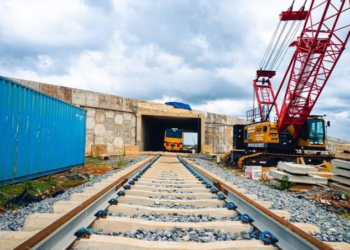
A 24-hour critical minerals processing enclave will be established in the Western Region, supported by a railway line from Takoradi to Nyinahin through major mineral towns, including Nsuta and Awaso.
The railway is expected to transport manganese and bauxite to the processing enclave, while plans are also in place to extend the line to Hamile in the Upper West Region from 2030.
5. Tourism, culture and creative arts – US$1 billion
Government has earmarked US$1 billion for tourism, culture and creative arts, with the aim of developing a year-round visitor economy that generates foreign exchange and supports local businesses.
The Black Star Experience will be expanded beyond the December festivities to attract visitors throughout the year through heritage tourism, ancestry services, family reunions, educational programmes and creative arts events.
Plans include the conservation of forts, castles and other heritage sites, the establishment of a Ghana Medical Tourism Hub and the construction of an international convention centre at the La Trade Fair site.
The programme also provides for five new hotels: two five-star facilities in Accra and Kumasi, and three four-star hotels in the Cape Coast-Elmina Heritage corridor, the Volta Region and Northern Ghana.
A new National Theatre is also planned for Kumasi.
6. Textiles and garments – US$1 billion
The textiles and garments industry will receive US$1 billion to support the modernisation of mills, expansion of factories and development of dedicated industrial enclaves.
Government also intends to use public procurement to create a dependable market for locally manufactured products.
Proposed changes to procurement laws will require public institutions to source items such as uniforms, hospital textiles, bedding and protective clothing from Ghanaian manufacturers.
By 2030, the government wants local textile and garment producers to operate at commercial scale and supply international markets.
7. Pharmaceuticals and biomanufacturing – US$1 billion
Another US$1 billion has been earmarked for pharmaceuticals and biomanufacturing to reduce Ghana’s reliance on imported medicines, which currently account for an estimated 70 to 75 per cent of national requirements.
Government plans to establish pharmaceutical manufacturing hubs in the Eastern and Central Regions, with construction expected to begin in 2027 through a state-owned special purpose vehicle.
The target is to produce between 60 and 80 per cent of Ghana’s essential medicine needs locally by 2030.
Public procurement will also be used to prioritise Ghanaian-produced medicines, provided they meet approved quality and manufacturing standards.
The pillar is expected to generate approximately 20,000 direct and indirect jobs.
8. Technology economy – US$300 million
The final pillar will receive US$300 million between 2027 and 2028 to establish a National Artificial Intelligence Centre and upgrade rural 2G mobile networks to reliable 4G connectivity.
The proposed AI centre will support research, innovation, professional training and the development of digital skills among young people.
Its activities will prioritise applications in agriculture, healthcare, energy, mining, logistics, Ghanaian languages and public services.
Government also intends to equip young people with practical skills in software development, data analytics, artificial intelligence, networks and digital business services.
The investment is expected to improve access to digital services, support businesses and create opportunities for Ghanaian talent to participate in the global digital economy.
A shift towards production and jobs
Dr. Forson said the eight pillars were designed to function as one integrated production system, with agriculture supplying industrial raw materials, reliable energy supporting manufacturing and minerals gaining value locally before export.
He said government would provide strategic infrastructure and create predictable conditions for businesses, while the private sector would take the lead in investment, innovation and employment creation.
“The private sector will carry the principal responsibility for investment, innovation, production and sustainable employment,” he said.
He added that government support would be transparent, time-bound and linked to verified results.
The Finance Minister urged Ghanaians to use the period of economic stability to change what the country produces and sells to the world.
“We choose production; we choose jobs with dignity; and we choose a national purpose that can survive electoral cycles and outlast governments!” he said.